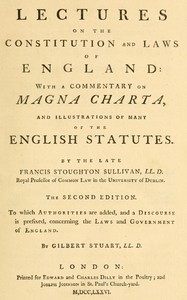
Lectures on the constitution and laws of England by Francis Stoughton Sullivan
So, you're thinking about reading a book written in the 1700s about English law? Don't run away just yet. Francis Stoughton Sullivan's *Lectures on the Constitution and Laws of England* might sound like a snooze, but trust me, it's way more interesting than your high school civics class.
The Story
Sullivan was a law professor at the University of Dublin in the mid-1700s, and he wrote these lectures to teach his students. But he didn't just list rules. Instead, he went back to the deep past—like, ancient Anglo-Saxon times—and showed how English law and the constitution grew out of almost three thousand years of violence, arguments, and lucky breaks. Think of it like a family tree for laws. He starts with Norman conquerors, kings, and barons fighting over power, then shows how you went from kings bossing people around to Parliament and judges making decisions. He covers everything from criminal law to property rights to the crazy ways justice was served back then. It's a detective story about how power slowly shifted from one person (the king) to the people (even when those 'people' were mostly rich white guys).
Why You Should Read It
Let's be real—it's not a thriller. But Sullivan had this way of asking the big questions: What makes a law fair? And how do you build a system that doesn't just serve the powerful? The coolest part is that these lectures were written decades before the American Constitution and revolution. He's building the vocabulary and logic that Thomas Jefferson and James Madison would later borrow to design their new government. There's something fun about catching those echoes, like you're backstage at history's big show. And honestly, in today's world where people argue constantly about 'the rule of law' and 'constitutional rights,' going back to these early arguments feels a little rebellious. You'll start noticing these ideas in the news quotes and hot takes. Plus, Sullivan had a nice dry sense of humor—kind of an uncle who's sarcastic but also gives you solid advice.
Final Verdict
Who is this for? Presidents? Nah. History nerds, political junkies, anyone whose eyes light up when someone says 'originalism' in a debate. Perfect for understanding why we still argue about what the Founders 'really meant'—spoiler alert: they were arguing before they even signed the thing. Also works if you just like big thoughts neatly served up in lecture lengths (each lesson is like a short essay). If you can handle some period-specific language and reference to weird old concepts, this is as fresh as anything you'll pull from a shelf today. But start small—read one lecture, not the whole thing. It works well as a conversation starter for dinner parties or, more likely, to stare at your ceiling and wonder. Definitely worthwhile if you enjoy books that feel like participating in a historical conversation.
This digital edition is based on a public domain text. It is available for public use and education.