eBooks
97 Books foundAbout the TOAUG Public Domain Literature Library
The TOAUG Public Domain Literature Library offers a curated collection of 97 public-domain texts, each accompanied by editorial notes that provide context and reading guidance. The Catalogue maintenance uses source records and bibliographic context.
Browsing the collection is straightforward: visitors can view the entire list of books, each with a title, author, publisher, keywords, and a catalogue note that highlights key themes and structures. The catalogue currently contains 4 active subject categories: Sacred Texts, Theology, Sermons Devotion, and Comparative Religion. Categories are used as browsing aids and may overlap where a work reasonably fits more than one subject. Readers may also navigate via the searchable index or by following internal links between related works.
Every book in the catalogue is sourced from Project Gutenberg, ensuring that all texts are in the public domain and free to read. The editorial notes are prepared for this catalogue, who provides analysis without claiming to have read every work in full. The notes are intended to assist readers in approaching unfamiliar material, not to replace the experience of reading the texts themselves.
Book‐Record Information
Each record includes the full title, author(s), publisher (always Project Gutenberg), relevant keywords, and a target‐reader designation. The catalogue note is a concise editorial observation, often describing the author's voice, structure, or historical context. For example, the note for The Augsburg Confession explains its legal‐petition frame and 28 articles, while the note for The Upanishads highlights the translator's emphasis on spiritual accessibility.
Source Attribution
All texts originate from Project Gutenberg, a trusted repository of public‐domain literature. No original scanning or transcription is performed by TOAUG. The editorial notes are independent and do not reflect the views of Project Gutenberg or any affiliated institution.
Three Practical Reading Paths
Categories as Navigation Aids
The The catalogue currently contains 4 active subject categories: Sacred Texts, Theology, Sermons Devotion, and Comparative Religion.History, Empires & Change: Texts & Context, is a broad grouping that includes theological treatises, critical studies, and devotional works. It is not a definitive literary judgment but a practical way to help readers discover texts that share a focus on religion as a historical and social phenomenon. Readers should rely on catalogue notes and individual descriptions to find works that match their interests.
Bibliographic dates and catalogue measurements
The catalogue distinguishes the Project Gutenberg digital release from a work’s original or first publication. Project Gutenberg is identified as the digital source for the edition available here; its release year is therefore shown as Gutenberg Release Year, not as the work’s original publication year.
When an explicit first-publication or issue date can be supported directly by the title or issue information, it may be shown separately as First Publication Year. When that date cannot be confirmed, the catalogue displays Not confirmed rather than guessing a year.
Where the source text can be measured reliably, the catalogue may provide word count and estimated reading time. These measurements describe reading scope and are not quality rankings.
The current catalogue contains 4 active subject categories: Sacred Texts, Theology, Sermons Devotion, and Comparative Religion. Categories are browsing aids and may overlap where a work reasonably fits more than one subject.
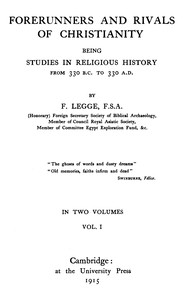
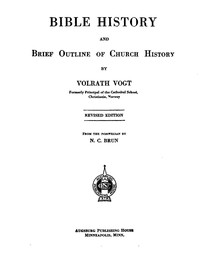
- Featured