1

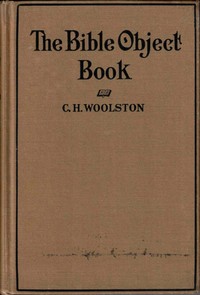
The Bible object book — Reading Notes
(0 User reviews)
1356
Project Gutenberg
2023
Not confirmed
Children's sermons
Readers of public-domain and historical texts
Project Gutenberg digital edition
en
Edition facts
Words
71,358
Reading time
311 min
Text sections
8
Before opening The Bible object book — Reading Notes, the edition data offers a quick orientation: 71,358 words, 5 hr 11 min estimated reading time, and 8 detected text sections.
The text analysis averages about 17.8 words per sentence, while the detected sections provide another way to judge how the source is divided.
Project Gutenberg metadata also associates the work with “Children's sermons,” connecting these edition facts with the source record’s subject description.
Source:
Project Gutenberg record #71416
This editorial note examines C. H. Woolston's authorial choices in diction, dialogue, and description within his 1926 object lesson collection, focusing on how plain language and visual metaphors shape moral instruction for children.
Read the complete public-domain text at its original source.
Read on Project GutenbergC. H. Woolston's The Bible Object Book (1926) opens with a striking claim: these object lessons are "written in plain English and in common words." This promise of simplicity is not merely a preface; it shapes every sentence. Woolston avoids theological jargon, preferring concrete nouns and active verbs. A lesson on the Palm Sunday story, for instance, does not begin with doctrine but with a tangible object: "Secure, if possible, a long green leaf which you can call a palm-leaf." The instruction is direct, almost like a recipe. This choice reflects a deliberate authorial strategy: to make spiritual truths accessible through everyday materials and straightforward language.
Direct Address and the Rhetoric of the Classroom
Woolston consistently uses second-person pronouns and imperative verbs, creating a teacher-to-student dynamic. In the palm-leaf lesson, he commands: "Teach them the Hosanna cry which the children used to welcome Jesus." The word "teach" positions the adult reader as an active instructor, not a passive recipient. Elsewhere, he shifts to direct moral application: "Some of us are doing the same thing today." This move from narrative to personal exhortation is a hallmark of Woolston's style. He does not merely describe a biblical event; he immediately translates it into a present-day lesson. The effect is intimate and urgent, as if the reader is being spoken to in real time.
Visual Metaphors as Structural Devices
Woolston's object lessons rely on visual metaphors that are physically demonstrated. The palm-leaf becomes a cross, then a crown. This transformation is not just described but enacted: "Here add a shorter piece of leaf and make the cross." The metaphor is literally constructed. Similarly, in the lesson "Jesus Changes Things," a cardboard display with colored squares represents racial groups, then is flipped to show all squares in gold. Woolston uses the physical manipulation of objects to mirror spiritual change. This technique makes abstract concepts—conversion, unity, sin—tangible. The authorial choice to build lessons around such props underscores a belief that children learn best through sight and touch.
Narrative Economy and Emotional Contrast
Woolston's storytelling is economical, often compressing complex narratives into a few sentences. The Palm Sunday account moves swiftly from joy to betrayal: "But in a few hours a great change came over the people, and they no longer showed their joy, but were silent, then angry." He uses short, parallel clauses to heighten emotional contrast. The shift from "Hosanna" to "Crucify him" is rendered without embellishment, relying on the stark juxtaposition of words. This brevity serves a pedagogical purpose: it keeps the moral arc clear. Woolston does not linger on historical detail; he focuses on the lesson's application. The emotional weight is carried by the objects themselves—the palm-leaf turned cross—rather than by elaborate description.
The Role of the Introduction in Framing Authorial Intent
The introduction by Homer A. Rodeheaver provides an external perspective on Woolston's methods. Rodeheaver emphasizes that Woolston "loves and understands children" and that his work is "an affair of the heart." This framing reinforces the authorial persona Woolston cultivates: a patient, experienced teacher who has tested his lessons in practice. Rodeheaver notes that Woolston's plans "really work," suggesting a pragmatic, results-oriented approach. The introduction also hints at Woolston's broader mission: "teaching preachers and teachers how to win children and young people to Christ." This context illuminates why Woolston's diction is so plain—he is writing for an audience of educators who need replicable methods, not theological profundity.
Woolston's authorial choices reveal a careful balance between simplicity and moral seriousness. His plain English and object-based pedagogy are not merely stylistic; they are theological commitments. By grounding abstract truths in physical objects and direct address, he creates a learning experience that is both accessible and memorable. Readers approaching this book should attend to how Woolston uses language to bridge the gap between biblical narrative and everyday life, and how his visual metaphors function as arguments in themselves.
When I held Woolston’s little book, I thought how its plain words for children echo an older quietness—the steady, unhurried voices in Female Scripture Biography, Volume I — Reading Notes. Both simply watch lives unfold, teaching without raising their voice. A gentle kinship, like two candles on the same shelf, sharing one steady light.
There are no reviews for this eBook.
There are no comments for this eBook.
Reader reflection
Record your reading impressions
A brief reflection can help important ideas stay with you longer.
Your progress
0
/
10
2
What was your overall reaction to the book?
3
Would you encourage someone else to read it?
4
How easy was the book to follow?
5
Was the book moving at the right speed?
6
What was its emotional impact?
7
Did you relate to its people, ideas, or situations?
8
Did you gain anything practical from the text?
9
What changed or sharpened your thinking?
10