1

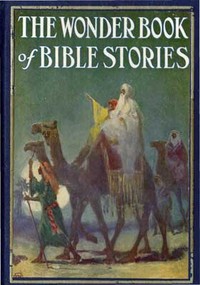
The Wonder Book of Bible Stories — A Closer Reading
(0 User reviews)
506
Project Gutenberg
2005
Not confirmed
Bible stories, English
Readers of public-domain and historical texts
Project Gutenberg digital edition
en
Edition facts
Words
53,156
Reading time
232 min
Text sections
7
For The Wonder Book of Bible Stories — A Closer Reading, the stored edition analysis reports 53,156 words, 3 hr 52 min estimated reading time, and 7 detected text sections.
The text analysis averages about 22.1 words per sentence, while the detected sections provide another way to judge how the source is divided.
Project Gutenberg metadata also associates the work with “Bible stories, English,” connecting these edition facts with the source record’s subject description.
Source:
Project Gutenberg record #16042
This editorial note examines how Logan Marshall's 1925 retelling of Bible stories uses consistent narrative patterns, such as divine intervention and moral framing, to guide a first reading. Observations are drawn from the excerpts, focusing on the editor's voice, structure, and treatment of key episodes like David and Goliath.
Read the complete public-domain text at its original source.
Read on Project GutenbergLogan Marshall's The Wonder Book of Bible Stories (1925) opens with a table of contents that lists forty stories, from Adam and Eve to Stephen the first martyr, each given a descriptive subtitle such as "The Story of the Money in the Sacks." The excerpts show that Marshall consistently frames each narrative with a moral or providential lesson, often adding explanatory commentary not found in the biblical text. For instance, in the David and Goliath episode, the editor explicitly states that "God had given to David a plan" and that David aimed to "throw the giant off his guard." This editorial voice shapes the reader's understanding of events as guided by divine will.
Narrative Framing and Moral Emphasis
Throughout the excerpts, Marshall inserts interpretive statements that direct the reader's attention to the moral or spiritual meaning of each story. In the account of David and Goliath, the editor writes that David's victory demonstrated "that there is a God in Israel, and that He can save in other ways besides with sword and spear." This kind of explicit moralizing is typical of the collection. The editor also adds details about characters' thoughts and motivations, such as David "thinking out the best way for fighting him," which are absent from the original biblical narrative. These additions serve to make the stories more accessible and instructive for a young audience, emphasizing faith and divine intervention over human agency.
Repetition of Structural Patterns
The excerpts reveal a recurring structural pattern: each story begins with a situation of conflict or need, followed by divine intervention or a faithful response, and concludes with a clear resolution that reinforces a moral lesson. In the David story, the pattern is: threat (Goliath), faithful preparation (David's plan and sling), divine victory (stone to the forehead), and aftermath (Philistines flee, David praised). Similarly, the story of Moses' finding follows a pattern of danger (baby in the river), providential discovery (Pharaoh's daughter), and resolution (mother called as nurse). This consistent structure helps a first-time reader anticipate the arc of each tale, making the collection feel cohesive and predictable.
Character Portrayal and Dialogue
Marshall's characterizations are simplified and often polarized. Goliath is depicted as arrogant and blasphemous, while David is humble and faithful. The editor amplifies the giant's taunts, having him say, "Am I a dog? that this boy comes to me with a staff?" and adds that he "cursed David by the gods of his people." David's response is expanded into a speech that explicitly contrasts the weapons of man with the power of God. This technique of heightening dialogue and internal thought makes the characters more vivid and the moral stakes clearer. However, it also means that the biblical text is freely adapted to suit the editor's didactic purpose, which readers should be aware of when comparing to the original.
Omissions and Simplifications
Based on the excerpts, Marshall omits or condenses complex elements that might confuse a young reader. For example, in the David and Goliath story, the editor skips the detailed description of Goliath's armor and the negotiations between armies, focusing instead on the confrontation. The story of the Cave of Adullam is similarly streamlined: it mentions David's escape, his friendship with Jonathan, and the gathering of followers, but omits the political intricacies of Saul's court. The editor also avoids ambiguous or troubling episodes, such as David's later sins. These choices suggest that the collection is designed to present a sanitized, morally clear version of the Bible, suitable for children or new readers.
Readers approaching The Wonder Book of Bible Stories for the first time should note that it is a retelling, not a translation. Marshall's editorial hand is evident in every story, shaping the narrative to emphasize faith, divine providence, and clear moral lessons. The consistent structure and simplified characterizations make the collection easy to follow, but those familiar with the Bible will notice significant alterations. This edition is best understood as a product of its time—a didactic work intended to instill religious values through engaging, accessible storytelling.
Sitting with The Wonder Book of Bible Stories, I kept noticing how its editorial hand shaped every episode, gently steering the moral. That quiet structure reminded me of an old volume on my shelf, The American Church Dictionary and Cyclopedia — Reading Companion, where definitions and rubrics similarly order the sacred, offering a familiar frame for what might otherwise feel vast and unbounded.
There are no reviews for this eBook.
There are no comments for this eBook.
Reader reflection
What was your reading experience?
Capture what you thought, learned, and would like to remember.
Your progress
0
/
10
2
How much did you enjoy the reading experience?
3
Would you encourage someone else to read it?
4
Did the language feel accessible?
5
How did the reading compare with what you expected?
6
How would you rate its originality?
7
Did this book create an emotional response?
8
Could you see yourself revisiting this book?
9
What did this book teach you most?
10