1

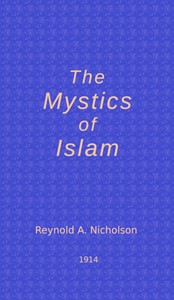
The Mystics of Islam — Inside the Classic
(0 User reviews)
1818
Project Gutenberg
2022
Not confirmed
Mysticism -- Islam; Sufism; Philosophy, Arab
Readers of public-domain and historical texts
Project Gutenberg digital edition
en
Edition facts
Words
43,809
Reading time
191 min
Text sections
29
Before opening The Mystics of Islam — Inside the Classic, the edition data offers a quick orientation: 43,809 words, 3 hr 11 min estimated reading time, and 29 detected text sections.
The text analysis averages about 19.4 words per sentence, while the detected sections provide another way to judge how the source is divided.
Project Gutenberg metadata also associates the work with “Mysticism -- Islam,” connecting these edition facts with the source record’s subject description.
Source:
Project Gutenberg record #67388
An introduction to Sufism that foregrounds the mystics' own voices through translated poetry and prose, examining the Path, gnosis, and the problem of evil via Jalāluddīn Rūmī's dialectical arguments.
Read the complete public-domain text at its original source.
Read on Project GutenbergReynold A. Nicholson's The Mystics of Islam opens not with a definition of Sufism but with an editor's note that frames the work as part of a series on comparative mysticism. The book's structure moves from the practical stages of the Path to abstract discussions of divine unity and theodicy, with Nicholson letting the mystics speak through his translations of Arabic and Persian sources. The excerpts show a recurring pattern: a doctrinal claim is followed by a poetic illustration, often from Jalāluddīn Rūmī's Mathnawī. This alternation between prose exposition and verse gives the text a rhythm that mirrors the Sufi emphasis on both knowledge and love.
The Path as a Structured Ascent
Chapter I, 'The Path,' lays out the Sufi journey as a sequence of stations and states. Nicholson draws on classical manuals to describe stages such as repentance, abstinence, and trust in God. The language is precise: the Path is not a metaphor but a discipline with measurable progress. The excerpts do not reveal how many stations are enumerated, but the emphasis falls on the transformation of the seeker's will. One notable detail is the use of the Arabic term maqām (station) versus ḥāl (state), a distinction that recurs in later chapters. The structure here is linear, but later sections complicate it by introducing the idea that the goal is not a fixed point but a continual unveiling.
Illumination and the Role of Poetry
In the chapter on Illumination, Nicholson shifts from practice to epistemology. The gnostic (ʿārif) knows God not through reason but through direct vision. The excerpts show how Nicholson uses poetry to embody this knowledge: verses from Rūmī and others are woven into the argument, often serving as the climax of a paragraph. For instance, the line 'I fare as one by whose majestic will / The world revolves' illustrates the union of will and compulsion. The poetry is not decorative; it carries the philosophical weight. Nicholson's translations aim for clarity while preserving the paradoxical tone of the originals. The structure of this section mirrors its content: the prose prepares the ground, and the verse delivers the illumination.
The Problem of Evil and Divine Unity
One of the longest excerpted passages tackles theodicy through Rūmī's dialectic. Nicholson presents the argument that evil is necessary for the manifestation of good, using analogies of the bone-setter and the alchemist. The poet's logic is deliberately strained, and Nicholson notes that 'intense moral feeling is worth any amount of accurate thinking.' The structure here is argumentative: a claim, an objection, a counter-argument. Rūmī's verses serve as both premise and conclusion. The passage also introduces the concept of not-being as the principle of evil in man, while affirming that God is real Being. This section shows how Nicholson balances philosophical exposition with the mystics' own rhetorical strategies.
The Interplay of Prose and Verse
Throughout the excerpts, a consistent structural pattern emerges: Nicholson states a doctrine, then illustrates it with a poetic quotation. This is not mere ornamentation; the verse often contains the most radical claims. For example, the assertion that 'falsehood were nothing unless truth were there' is embedded in a poem about counterfeit coins. The prose frames the poetry, but the poetry drives the argument. Nicholson's own voice is restrained, intervening mainly to clarify or to note a logical difficulty. This technique gives the book a layered texture: the reader moves between analytical commentary and the direct, often paradoxical, language of the mystics. The result is a work that demonstrates Sufi teaching methods as much as it explains them.
Readers approaching The Mystics of Islam should attend to the way Nicholson uses poetry as evidence, not embellishment. The book rewards those who read the verses slowly, as they often contain the core of the argument. Because the excerpts are incomplete, the full scope of the Path and the later chapters on saints and miracles remain unknown. But the pattern established here—doctrine, verse, reflection—offers a reliable guide to Nicholson's method and to the Sufi tradition he presents.
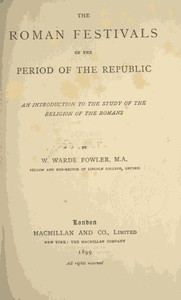
The rain kept time with Rūmī’s dialectical turns, until the mystics’ yearning for divine unity began to feel liturgical, almost processional. Later, I found myself wondering how ritual anchors belief, and fetched The Roman Festivals of the Period of the Republic An Introduction to the Study of the Religion of the Romans — A Closer Reading from the shelf. Both books whisper the same quiet secret: the sacred is rehearsed, not merely felt.
There are no reviews for this eBook.
There are no comments for this eBook.
Reader reflection
What was your reading experience?
Capture what you thought, learned, and would like to remember.
Your progress
0
/
10
2
How much did you enjoy the reading experience?
3
How likely are you to recommend this book?
4
Did the language feel accessible?
5
Would you read this book again?
6
Did you gain anything practical from the text?
7
Was the book moving at the right speed?
8
Did any part of the book feel personally relevant?
9
Which lesson or insight stayed with you?
10