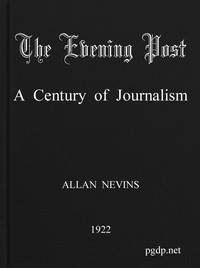
The Evening Post: A Century of Journalism by Allan Nevins
Allan Nevins’ The Evening Post: A Century of Journalism isn’t just a history book—it’s like uncovering the diary of a scrappy newspaper that lived through nothing less than the making of America. Think of it as the biography of a newsroom, and its life is wilder than most people imagine.
The Story
The book tracks the New York Evening Post from its start in 1801 through a century of chaos, growth, and never-ending change. Wow, what a century it was! We’re walking alongside the paper as it outlived the Civil War (barely), survived clashing editors with bigger-than-life egos, and even tried to keep up when faster competition came—like the rise of cheap tabloids and same-day updates. But Nevins doesn’t stop at just ‘and then they printed a fake story once’—he looks closely at the internal fights: who makes the call when a big ad buyer wants their scandal hushed? What does integrity even mean when your reporters sleep in their offices because news breaks all night? Each chapter is like peeling an onion: there’s lot wrangling with the Morgan banks, and a tense standoff against corruption, plus the introduction of that modern killer ’reporters chasing telephones.’ But at the heart is a single fascinating question: can an old-fashioned, intellectual paper still be respected when everyone wants quick, outrageous headlines? It turns out that survival was never guaranteed.
Why You Should Read It
Full disclosure: I picked this up for work research expecting a snooze-fest, and instead got hooked. Most books about ’important newspapers’ feel toasty and dead, but this one hums. Nevins writes like a journalist—can’t he help it?—and treats editors of the 1800s like rock stars and anti-heroes. This isn’t a cold timeline but a story about real people: fiery William Cullen Bryant, stealthy James Gordon Bennett, a parade of owners who worry about wallet versus guts. Have you ever argued with a friend about bias in the news? This book practically hands you the earliest script of that war. Chaptes feel modern—anger over ’sullied publicity,’ boycotts for stories they shouldn’t have run—and ironically highlights that we’re still debating freedom of the press with their lonely decisions in mind. The Evening Post wasn’t afraid to be political, almost bankrupting itself defending unpopular calls—like speaking up against slavery when Southern business called the shots. Might be relevant now somehow? But mostly I just enjoyed being lost in another century’s editor hiss and pencil fights at crazy hours.
Final Verdict
This is the perfect companion for anyone bored with smart but stiff histories—or insomniacs who stay up debating late-breaking dramas (pun). If you ever wonder what ‘they’ were thinking while carving journalism from scratch, grab it. It fits natural alongside fans of books like The Imperfectionists or history buffs who just love unsleeping conflict and memorable voices—though maybe skip if you mostly grab beach reads with body counts.
This digital edition is based on a public domain text. Preserving history for future generations.