1

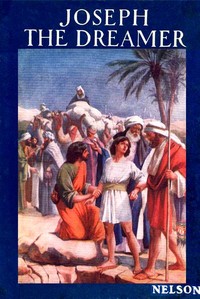
Joseph the Dreamer — Reading Companion
(0 User reviews)
1176
Project Gutenberg
2009
Not confirmed
Joseph (Son of Jacob) -- Juvenile literature; Bible stories -- Old Testament
Readers of public-domain and historical texts
Project Gutenberg digital edition
en
Edition facts
Words
7,163
Reading time
32 min
Text sections
1
Before opening Joseph the Dreamer — Reading Companion, the edition data offers a quick orientation: 7,163 words, 32 min estimated reading time, and 1 detected text section.
The text analysis averages about 21.5 words per sentence, while the detected sections provide another way to judge how the source is divided.
Project Gutenberg metadata also associates the work with “Joseph (Son of Jacob) -- Juvenile literature,” connecting these edition facts with the source record’s subject description.
Source:
Project Gutenberg record #30218
Amy Steedman retells the biblical story of Joseph, focusing on the emotional dynamics of family favoritism, the tension between dreams and reality, and the gradual revelation of identity. The narrative voice is direct and child-oriented, with vivid descriptions of the coat of many colors and the silver cup episode.
Read the complete public-domain text at its original source.
Read on Project GutenbergAmy Steedman opens her retelling of Joseph's story with a direct address to the reader, calling it "the strangest and most exciting adventures of any boy who ever lived." This establishes a tone of intimate, almost conversational storytelling aimed at a young audience. The narrative quickly homes in on the emotional core: Jacob's preferential love for Joseph and Benjamin after their mother's death. Steedman's language is economical but evocative, describing the coat of many colours as "gay and beautiful" and noting that it made onlookers say, "This must be the son of a great chief!" The brothers' envy is presented as a gradual, understandable reaction rather than sudden malice, and Joseph's dreams are framed as wonders he cannot help but share, not as deliberate boasts.
The Coat and the Dreams
Steedman uses the coat of many colours as a tangible symbol of favoritism. She describes it as made "of different pieces of coloured cloth joined together," emphasizing its handmade, personal quality. The coat is not merely a garment but a public declaration of status, prompting strangers to identify Joseph as a chief's son. The dreams—of sheaves bowing and stars paying homage—are presented as spontaneous, almost involuntary utterances. Joseph cries, "Hear, I pray thee, this dream that I have dreamed!" and the brothers' reaction is one of cumulative anger. Even Jacob "did not quite approve." Steedman carefully balances Joseph's innocence with the brothers' perspective, noting that Joseph was "straightforward good-natured" and willing to help in the fields, yet the tension escalates until the brothers must leave for distant pastures.
The Silver Cup and the Test
When the brothers return to Egypt with Benjamin, Joseph orchestrates a test. Steedman highlights the emotional stakes: Jacob's anguished cry, "All these things are against me!" and his fear that harm to Benjamin would "bring down my gray hairs with sorrow to the grave." The silver cup planted in Benjamin's sack transforms the brothers' joy into "blackest sorrow." Joseph's servants accuse them, and the search is described with mounting dread. Steedman's pacing is deliberate: the cup is found, the brothers must return, and only then does Joseph reveal himself. The moment of recognition is stripped of melodrama—Joseph sends away the servants, holds out his hands, and speaks with tears: "I am Joseph, your brother, whom ye sold into Egypt." The forgiveness is immediate and unconditional, framed as divine providence: "God did send me before you to preserve life."
Voice and Audience
Steedman's narrative voice is consistently child-friendly without being condescending. She uses direct address and simple sentence structures, but does not shy away from complex emotions like jealousy, grief, and forgiveness. The brothers are described as "strong, grown-up men" who "no longer needed their father's care," a phrasing that makes Jacob's favoritism understandable. Joseph's dreams are called "strange" and "wonderful," and his telling of them is marked by excitement, not arrogance. The story's moral weight is carried by the characters' reactions rather than explicit commentary. When Jacob finally learns Joseph is alive, Steedman writes, "It sounded almost like a magic tale," preserving a sense of wonder. The prose is rhythmic, with repeated patterns like "It was a long journey... but joy gave him strength" that echo oral storytelling traditions.
Structure and Repetition
Steedman structures the narrative around key objects and phrases that recur for emphasis. The coat of many colours appears early and is referenced again when the brothers' anger is rekindled. The dreams are told twice: once in Joseph's own words and later summarized. The silver cup episode mirrors the earlier betrayal, with Benjamin taking Joseph's place as the endangered brother. Steedman also repeats the phrase "the great lord of the country" to maintain Joseph's anonymity until the reveal. The final journey of Jacob is described with parallel phrasing: "It was a long journey for such an old man; but joy gave him strength to endure it." This structural symmetry reinforces the themes of reversal and redemption. The book ends with a list of other titles in the series, positioning this retelling as part of a larger collection of biblical stories for children.
Steedman's retelling is notable for its restraint: she does not moralize or add invented dialogue, but lets the biblical narrative's inherent drama unfold through careful selection of detail. Readers familiar with the Genesis account will recognize the fidelity to the source, while new readers will find a clear, emotionally resonant entry point. The story's power lies in its simplicity—the coat, the dreams, the cup, and the embrace—each element carrying weight without overwrought explanation. This edition is best read aloud, where the rhythmic prose and direct address can be fully appreciated.
I keep returning to that moment where Joseph, in his fine coat, still can’t see what his brothers feel. It’s the ache of being loved too much and understood too little. Lately I’ve been rereading Christology of the Old Testament: And a Commentary on the Messianic Predictions. Vol. 2 — Context and Discussion, and it makes me wonder if even Joseph’s dreams were pointing somewhere beyond him, quietly.
There are no reviews for this eBook.
There are no comments for this eBook.
Reader reflection
How will you remember this book?
Save your reaction, strongest insight, and memorable passage.
Your progress
0
/
10
2
Did this book hold your interest?
3
How likely are you to recommend this book?
4
How demanding did the text feel?
5
Did the story or argument move comfortably?
6
Could you apply anything you learned?
7
What did you appreciate most?
8
Did you relate to its people, ideas, or situations?
9
In one sentence, what did you learn?
10