1

The Cradle of the Christ: A Study in Primitive Christianity — Reading Notes
(0 User reviews)
1549
Project Gutenberg
2011
Not confirmed
Christianity -- Controversial literature
Readers of public-domain and historical texts
Project Gutenberg digital edition
en
Edition facts
Words
59,992
Reading time
261 min
Text sections
6
The Cradle of the Christ: A Study in Primitive Christianity — Reading Notes can be approached with a clearer sense of reading commitment from its source measurements: 59,992 words, 4 hr 21 min estimated reading time, and 6 detected text sections.
The text analysis averages about 24.3 words per sentence, while the detected sections provide another way to judge how the source is divided.
Project Gutenberg metadata also associates the work with “Christianity -- Controversial literature,” connecting these edition facts with the source record’s subject description.
Source:
Project Gutenberg record #36767
Frothingham's 1877 study examines the Gospel of John and Johannine epistles as evidence of a shift from ethical Judaism to a speculative, sectarian Christianity centered on belief in the Logos.
Read the complete public-domain text at its original source.
Read on Project GutenbergFrothingham opens his preface with a defensive posture, anticipating that his literary study will be read as a covert attack on Christianity. He insists that religion is independent of history, comparing the lily's beauty to the chemist's analysis of slime—a metaphor that signals his method: dissecting textual origins without dismissing spiritual value. The excerpts show a scholar who moves from the Gospel of John to the Johannine epistles, tracing how the concept of love narrows from a universal virtue to a marker of doctrinal community. His prose is argumentative, laced with contrasts between the Sermon on the Mount and John's focus on belief.
The Preface as a Methodological Statement
Frothingham’s preface is not a mere courtesy; it frames his entire project. He anticipates the charge of controversy and rebuts it by asserting that his conclusions would leave the church’s spiritual institutions unchanged. The metaphor of the lily and the slime—where analysis of origins does not diminish beauty—is central. He explicitly distances himself from writers like Godfrey Higgins and Thomas Inman, who argued Christianity was nature-worship, and from those who claim the gospels’ ungenuineness dooms the faith. Instead, he treats Christianity as a historical institution that must justify itself by performance. This preface warns the reader that Frothingham will apply scientific scrutiny to scripture while claiming neutrality toward religious practice.
The Gospel of John: Love Contracted to Belief
Frothingham’s analysis of the Gospel of John focuses on what is absent: the Sermon on the Mount, the beatitudes, the parables. He contrasts John’s moral vision with Paul’s Romans 12 and 1 Corinthians 13, arguing that humanity shrinks to “incipient Christendom.” The word “love” is redefined: it is no longer a virtue but a sentiment limited to disciples. Frothingham quotes John 14:15 (“If ye love me, keep my commandments”) and notes that the commandments are not the decalogue but a call to believe. He concludes that the practical issue is sectarian narrowness, not human fellowship. This section shows his method of close reading, comparing texts to expose theological shifts.
The Johannine Epistles: Sin as Abstraction
In the epistles of John, Frothingham sees the Logos idea pushed further. He highlights the word “manifested” as key: the Son of God was manifested to destroy the devil’s works. The anti-Christ appears, and belief in the incarnation becomes the test of spiritual relationship. Frothingham notes that “sin” is used in strong language but sins are not particularized; sin becomes an abstraction, a deep-seated taint. He argues that the heart of natural goodness is eaten out. This section demonstrates his concern with how doctrine replaces ethics: the epistles make belief the criterion for eternal felicity or misery, leaving little room for virtue as traditionally understood.
The Rhetoric of Contrast and Comparison
Frothingham’s argumentative strategy relies on repeated contrasts. He sets the Gospel of John against the Synoptics, the Johannine epistles against Paul’s letters, and the early Jewish messianic conception against later Logos theology. He uses phrases like “not found here, at all” and “there is not a word” to emphasize omissions. His tone is analytical but pointed: he calls the morality “spectral” and the love “ecclesiastical.” The reader should watch for these comparative moves—Frothingham builds his case by showing what a text lacks relative to another. This method makes his study a kind of literary forensics, tracing how primitive Christianity transformed into a belief system.
Frothingham’s study is best approached as a sustained argument about textual evidence, not a comprehensive history. The excerpts reveal a writer who assumes his reader knows the New Testament well enough to follow allusions to omitted passages. Pay attention to his use of quotation: he rarely reproduces more than a few words, expecting familiarity. The preface’s defensive tone may color how you read his conclusions—he is aware of potential backlash. For a first reading, track how he uses the word “love” across the Gospel and epistles; it is the thread that ties his critique together.
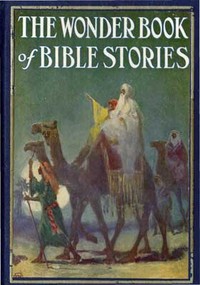
I keep thinking about how Frothingham shows faith quietly becoming something stranger, more inward. It reminded me of childhood nights with The Wonder Book of Bible Stories — A Closer Reading, where the same tales felt so warm and simple. Strange, how the same words can hold both that comfort and such haunting depth. It lingers.
There are no reviews for this eBook.
There are no comments for this eBook.
Reader reflection
Before you leave, reflect on the book
Use these questions to collect your thoughts before moving on.
Your progress
0
/
10
2
How much did you enjoy the reading experience?
3
Is this a title you would suggest to others?
4
How much effort did this book require?
5
Did this book create an emotional response?
6
Did the story or argument move comfortably?
7
Was the book easy to understand?
8
Would a second reading be valuable?
9
What is the main idea you are taking away?
10