1

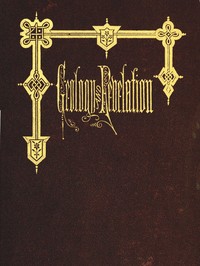
Geology and Revelation or, the Ancient History of the Earth, considered in the geological facts and revealed religion. — Text and Context
(0 User reviews)
192
Project Gutenberg
2016
Not confirmed
Bible and science; Bible and geology
Readers of public-domain and historical texts
Project Gutenberg digital edition
en
Edition facts
Words
117,649
Reading time
512 min
Text sections
14
The source record for Geology and Revelation or, the Ancient History of the Earth, considered in the geological facts and revealed religion. — Text and Context measures this digital text at 117,649 words, 8 hr 32 min estimated reading time, and 14 detected text sections.
The text analysis averages about 29.1 words per sentence, while the detected sections provide another way to judge how the source is divided.
Project Gutenberg metadata also associates the work with “Bible and science,” connecting these edition facts with the source record’s subject description.
Source:
Project Gutenberg record #52973
Gerald Molloy's 1870 work examines geological discoveries as challenges to revealed religion, using a Thomist principle of interpretive flexibility. The preface frames the book as a response to objections from science, while excerpts show a detailed method for establishing stratigraphic chronology via fossil assemblages.
Read the complete public-domain text at its original source.
Read on Project GutenbergGerald Molloy opens Geology and Revelation with a frank admission: the progress of modern science, particularly geology, has produced objections against revealed religion that have taken a firm hold of the public mind. Rather than dismiss these objections, Molloy insists that a defender of religion must first become familiar with the geological evidence itself. This stance—grounding theological argument in empirical study—shapes the entire work.
The book’s epigraph from Thomas Aquinas sets the tone: Scripture may be explained in many ways, and no interpreter should cling so tenaciously to one reading that they expose revelation to derision. Molloy thus positions himself within a tradition that allows for reinterpretation when scientific facts demand it.
A Thomist Framework for Science and Scripture
Molloy’s epigraph quotes Thomas Aquinas on the proper handling of scriptural interpretation when faced with contrary evidence. The key principle: truth of Scripture must be inviolably maintained, but no single exposition should be held so rigidly that it would bring derision upon the sacred text if proven false. This is not a defensive retreat but a methodological stance. Molloy applies it to geology: rather than forcing the Bible into a literal six-day creation, he leaves room for accommodation. The preface reinforces this by stating that the author found himself “brought face to face with Geological phenomena and Geological speculations” and resolved to study them. The work thus proceeds from a position of intellectual humility, not confrontation.
Building a Chronology from Fossils and Strata
One excerpt presents a detailed, almost pedagogical explanation of how geologists establish the chronological order of strata. Molloy uses a hypothetical example: three groups A, B, C with characteristic fossils a, b, c. When a new district reveals a group X between A and B with fossils x, the order becomes A, X, B, C. This method, he explains, was pioneered by William Smith, whose 1815 geological map of England is praised via a quotation from Charles Lyell as “a lasting monument of original talent and extraordinary perseverance.” Molloy emphasizes that the same principles have been applied across Europe, America, and Australia, producing a fairly well-ascertained chronological order. The language is precise and technical, avoiding theological argument in this section.
The Scope and Limits of Geological Knowledge
Molloy’s account of stratigraphy reveals a careful boundary between what geology can and cannot claim. He notes that the chronological order has been “pretty fairly ascertained” over a considerable part of the Earth, but particularly Europe. The phrasing is cautious: “supposed to have been produced” appears in the description of the strata table. This modesty aligns with the Thomist principle of not overreaching. The excerpt also shows Molloy’s awareness that observations may be imperfect—a geologist may be unable to trace beds continuously, or the country may render observations impossible. In such cases, fossils become the decisive clue. By grounding his argument in the concrete practice of field geology, Molloy avoids abstract conflict and instead presents a working scientist’s view of the earth’s history.
Readers approaching Geology and Revelation should expect a work that takes geological evidence seriously on its own terms before attempting reconciliation with scripture. Molloy’s method—borrowed from Aquinas—allows for interpretive flexibility without abandoning the authority of revelation. The book is not a polemic but a careful, often technical exposition of stratigraphy and paleontology, framed as necessary preparation for theological reflection. Those interested in nineteenth-century attempts to harmonize science and faith will find a model of intellectual integrity here.
That grey afternoon, Molloy’s careful balancing of ancient strata and scripture felt less like a clash than a quiet handshake. I kept thinking how children must ask the same big questions, simply worded. Later, half-listening to rain, I picked up a forgotten volume nearby — The Bible for Young People — Inside the Classic — and found the same gentle wonder, offered without argument.
There are no reviews for this eBook.
There are no comments for this eBook.
Reader reflection
What was your reading experience?
Capture what you thought, learned, and would like to remember.
Your progress
0
/
10
2
What was your overall reaction to the book?
3
Would you recommend this book to another reader?
4
How demanding did the text feel?
5
Did the book give you something worth debating?
6
How clear did the writing feel?
7
How distinctive were its ideas or approach?
8
How strongly did the book affect you emotionally?
9
Which lesson or insight stayed with you?
10