1

The Babe in the Bulrushes — Reading Notes
(0 User reviews)
320
Project Gutenberg
2009
Not confirmed
Bible stories -- Old Testament; Moses (Biblical leader) -- Juvenile literature
Readers of public-domain and historical texts
Project Gutenberg digital edition
en
Edition facts
Words
7,528
Reading time
33 min
Text sections
1
This digital edition of The Babe in the Bulrushes — Reading Notes is described by source-level measurements including 7,528 words, 33 min estimated reading time, and 1 detected text section.
The text analysis averages about 22.7 words per sentence, while the detected sections provide another way to judge how the source is divided.
Project Gutenberg metadata also associates the work with “Bible stories -- Old Testament,” connecting these edition facts with the source record’s subject description.
Source:
Project Gutenberg record #30239
Amy Steedman's retelling of Moses and Samuel focuses on the emotional weight of parental love, divine calling, and the quiet courage of children. The prose uses sensory details—tears, bulrushes, a flickering lamp—to ground biblical events in intimate, human moments.
Read the complete public-domain text at its original source.
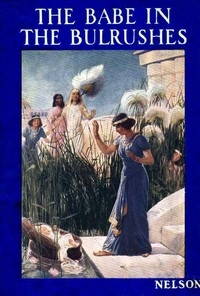
Read on Project GutenbergSteedman opens the story of Moses not with the Nile or the palace, but with a mother's tears. Jochebed sits holding her baby, and the narrator dwells on the physical details: the baby is 'strong and fair and healthy,' the crocodiles are 'cruel and hungry.' This is a domestic drama, not a royal one. The prose slows to describe the weaving of the bulrush cradle, the pitch that seals it, the soft bed inside. Every action is deliberate, weighted by fear and hope. Steedman lets the reader feel the mother's plan as a prayer, not a strategy.
A Mother's Hands and a Pharaoh's Decree
The narrative voice in the opening pages is intimate and urgent. Steedman uses short, breathless sentences: 'That was very hard for the poor people; but worse was to come.' The decree to kill baby boys is not a distant edict; it 'spread sorrow through all the land of Goshen.' The mother's perspective dominates. Jochebed is not named at first; she is simply 'a woman' holding 'her tiny baby.' The repetition of 'her' and 'baby' keeps the focus on the physical bond. When the cradle is set afloat, Steedman writes that Jochebed 'knew that presently the great princess... would come down to bathe.' This is not divine intervention but a mother's calculated hope. The prose trusts the reader to see the risk.
The Servant Who Hears His Name
The Samuel episode shifts from maternal anxiety to a child's bewilderment. Steedman builds the scene around sensory contrast: the dim lamp in the temple, the tired boy asleep, the sudden voice. Samuel's responses are immediate and literal: 'Here am I.' He assumes Eli is ill. The narrator notes that Samuel 'had learnt... to do exactly what he was told, never questioning.' This detail makes his obedience a habit, not a virtue. When the voice calls a third time, the boy 'positively' declares, 'Thou didst call me.' The word 'positively' is a small but telling choice—it conveys both certainty and a child's insistence. Eli's realization is slow, his eyes 'very dim,' and the message Samuel receives is terrible. Steedman does not soften it: the punishment will make 'even the ears of the people who heard about it should tingle.'
Repetition as a Narrative Tool
Steedman uses repetition to heighten emotional stakes. In the Moses story, the phrase 'the baby' appears again and again, as if the narrator cannot bear to name him yet. The cradle is called a 'little ark' twice, linking it to Noah's story without explanation. In the Samuel passage, the call-and-response pattern is repeated three times, each iteration tightening the tension. The boy runs to Eli, returns to bed, falls asleep, and is called again. The rhythm mimics a nightmare or a ritual. When Samuel finally answers, 'Speak, Lord, for Thy servant heareth,' the words are given in full, as if the narrator pauses to let them resonate. The repetition is not decorative; it is structural, mirroring the way a child learns through repetition and how a divine message might insist on being heard.
The Weight of Unspoken Knowledge
Steedman is skilled at showing what characters know but do not say. Jochebed 'prayed to God that He would help her to carry it out'—the plan is hers, the prayer is for courage. When the princess finds the baby, the narrator does not describe her thoughts; we only see her actions. In the Samuel story, the boy 'dreaded' Eli's question. His 'shining morning face was clouded and troubled.' The narrator tells us that 'the call he dreaded came all too soon.' But Samuel does not protest; he simply goes and stands at Eli's side. The emotional weight is carried by the gap between what is spoken and what is felt. Steedman trusts the reader to infer the fear, the loyalty, the burden of being chosen. The prose does not explain; it presents.
Steedman's retelling is notable for what it leaves out: there is no dramatic parting of the Red Sea, no burning bush, no plagues. The excerpts focus on the moments before the miracle—the waiting, the hiding, the listening. Readers familiar with the biblical accounts may find the pacing unusual. The value of this edition lies in its attention to the human scale of these stories: a mother's hands, a boy's confusion, the slow weight of a divine message. Approach it as a study in quiet devotion rather than epic adventure.
Sometimes I think of that babe in the bulrushes, and how a mother’s desperate love carried through the reeds. It always calls to mind a quieter volume I keep nearby, Forerunners and rivals of Christianity — Reading Notes, for both whisper of voices heard in darkness before the dawn breaks. A tender companionship, truly.
There are no reviews for this eBook.
There are no comments for this eBook.
Reader reflection
What did you think of this book?
Answer a few questions and save a private reflection on this device.
Your progress
0
/
10
2
How did the book work for you overall?
3
Would you recommend this book to another reader?
4
How demanding did the text feel?
5
Do you expect to return to this book?
6
Did the book give you something worth debating?
7
How valuable was this book for your own interests?
8
How original did the book feel?
9
What changed or sharpened your thinking?
10